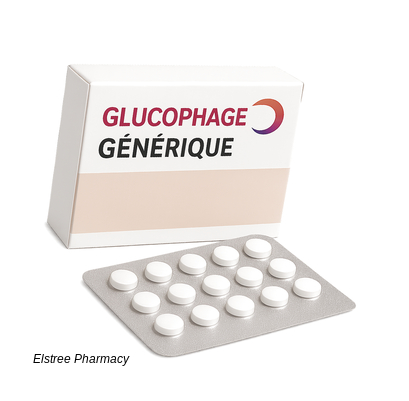
Glucophage, which contains the active ingredient metformin, is classified as a Prescription Only Medicine (POM) in the United Kingdom. Under standard MHRA regulations, you cannot purchase glucophage tablets from a pharmacy or general retailer without a valid prescription issued by a registered prescriber. However, in recent years, a number of registered online pharmacies, including Elstree Pharmacy, have introduced services that allow patients to buy generic glucophage without a traditional paper prescription. Instead, customers complete an online clinical questionnaire reviewed by a qualified pharmacist or doctor. If the responses meet established clinical criteria, a remote prescription can be issued to fulfil the order. This model of supply is legally recognised in the UK when operating under professional pharmacy standards and applicable legislation.
Using a remote-prescription service is not the same as purchasing off the shelf. Each order for glucophage still requires professional oversight, ensuring that the medicine is appropriate for your condition and will not cause harm or interact dangerously with other treatments. While the phrase “without prescription” is often used in marketing, it is important to understand that a valid prescription—albeit generated electronically after consultation—is still required by law.
Elstree Pharmacy offers a streamlined online pathway to order generic glucophage at a cheaper price than many branded products. By sourcing metformin directly from approved UK suppliers and maintaining lean overheads, we can pass on savings to the patient. We also offer various pack sizes and strengths, enabling you to buy glucophage online in the UK with options to suit short-term or longer-term treatment plans.
When you purchase generic glucophage without prescription through our website, we guarantee:
Please note: if you have certain medical conditions or take medicines that could interact with metformin, a remote-prescription service may not be appropriate. In such cases, you will be advised to seek an in-person medical review.
In the UK, medicines are regulated under the Human Medicines Regulations 2012. There are three main legal supply categories:
Glucophage (metformin) is firmly in the POM category due to its systemic effects, potential for serious side effects such as lactic acidosis, and the need for blood glucose monitoring. The POM status ensures that the medicine is only supplied when there is sufficient evidence of clinical need and safety monitoring. Even when you buy glucophage online without prescription, you are using a healthcare service that implements remote prescribing protocols. The underlying legal requirement for a prescription remains intact.
Glucophage is a brand name for metformin, a member of the biguanide class of oral antidiabetic agents. It is widely used as first-line therapy for type 2 diabetes mellitus because of its effectiveness in lowering blood glucose, favorable safety profile and additional metabolic benefits.
Metformin acts primarily by decreasing hepatic glucose production (gluconeogenesis) and improving insulin sensitivity in peripheral tissues such as muscle and fat. Unlike sulfonylureas, it does not stimulate insulin secretion, which means it carries a lower risk of hypoglycaemia. It also does not cause weight gain and may even support modest weight loss in some patients.
The active pharmaceutical ingredient in glucophage is metformin hydrochloride. Generic products contain the same molecular substance at equivalent strengths, subject to bioequivalence standards enforced by the MHRA and EMA.
Standard immediate-release (IR) metformin tablets are typically taken two to three times daily with meals to reduce gastrointestinal side effects. Extended-release (XL or XR) formulations are designed for once-daily dosing and can improve tolerability by releasing the drug more slowly.
While generally well tolerated, metformin is contraindicated in patients with severe renal impairment, certain cardiovascular conditions, acute metabolic acidosis, and other high-risk scenarios. Lactic acidosis is a rare but serious adverse event. That is why professional screening, including renal function checks, is a prerequisite for safe prescribing.
Gluconeogenesis is the metabolic process by which the liver generates glucose from non-carbohydrate precursors. In type 2 diabetes, excessive hepatic glucose output significantly contributes to hyperglycaemia. Metformin suppresses this overproduction, helping to reduce fasting blood glucose levels.
By activating the enzyme AMP-activated protein kinase (AMPK), metformin enhances peripheral glucose uptake and utilisation in muscle and adipose tissue. Improved insulin sensitivity leads to more efficient blood sugar regulation postprandially.
No. Metformin’s antihyperglycaemic effect is largely independent of pancreatic β-cell function, meaning it does not drive insulin release. This mechanism lowers the risk of insulin-related hypoglycaemic episodes when used alone.
No. Metformin does not chemically neutralise sugar in the digestive tract. Its glucose-lowering actions are systemic, modulating core metabolic pathways to reduce blood sugar production and improve glucose disposal.
Some patients may observe improved glycaemic control within days to weeks of starting metformin, but peak benefits for HbA1c reduction often accrue after 2–3 months of sustained therapy, assuming good adherence and stable lifestyle factors.
Metformin is not indicated for type 1 diabetes as these patients lack sufficient insulin production. It may, however, be used adjunctively in certain conditions with insulin resistance, such as polycystic ovary syndrome (PCOS) and gestational diabetes in some circumstances under specialist guidance.
Prices for metformin vary depending on brand, pack size, formulation and supplier. Generic immediate-release tablets are typically the cheapest option, but extended-release may command a premium due to formulation complexity.
Variations arise from manufacturing processes, excipient quality, packaging, distribution agreements and retailer markup. A lower-priced glucophage product does not necessarily imply substandard quality, provided it is MHRA-licensed and meets bioequivalence criteria.
| Example | Strength | Formulation | Price (GBP) | Status | Note |
|---|---|---|---|---|---|
| Generic A | 500 mg | Immediate-release tablets, 84-count | £5.49 | In stock | Cheapest generic brand |
| Generic B | 500 mg | Extended-release tablets, 30-count | £8.99 | In stock | Once-daily dosing |
| Brand X | 500 mg | Immediate-release tablets, 100-count | £12.50 | Information only | Requires prescription |
For the latest order availability and prices, please visit our online shop or contact the pharmacy team directly.
Metformin oral tablets are commonly available in 500 mg, 850 mg, and 1000 mg strengths. Extended-release formulations often come in 500 mg and 1000 mg variants. Treatment regimens are individualised based on glycaemic response and tolerability.
- Immediate-release (IR) tablets require multiple daily dosing.
- Extended-release (XL/XR) tablets permit once-daily administration.
- Some products are film-coated to improve swallowing comfort.
Generic products contain the same active substance, metformin hydrochloride, at the specified strength. They must demonstrate bioequivalence to the reference product in pharmacokinetic studies. Differences may exist in inactive ingredients, tablet shape, color and excipient profile.
Pack size can influence supply rules, reimbursement by healthcare systems and overall cost. Larger packs can reduce unit price but may not always reflect immediate clinical need or align with prescription durations under the remote-service model.
Type 2 diabetes mellitus is a chronic metabolic disorder characterised by insulin resistance and relative insulin deficiency, leading to elevated blood glucose levels. Over time, hyperglycaemia can damage blood vessels, eyes, kidneys and nerves.
Metformin is commonly used off-label to treat polycystic ovary syndrome due to its insulin-sensitising effects, which can improve menstrual regularity, reduce androgen levels and support fertility in some patients.
While insulin remains the standard of care for gestational diabetes in pregnancy, metformin may be used in specialist settings under consultant supervision if diet and exercise alone are insufficient or insulin therapy is unsuitable.
Ongoing research explores metformin’s potential roles in weight management, cardiovascular risk reduction, cancer prevention and anti-aging. These applications are not currently approved indications in the UK but illustrate the drug’s pleiotropic effects.
A Prescription Only Medicine can only be dispensed against a prescription that complies with regulatory requirements. Metformin cannot be sold or supplied directly to patients without such a prescription.
Under UK law, a pharmacist or prescriber can issue an electronic or faxed prescription following a formal clinical assessment, provided it is documented and follows professional guidelines. This process allows patients to purchase generic glucophage without prescription in the traditional sense, but the consultation itself generates the prescription.
The General Pharmaceutical Council (GPhC) and the Medicines and Healthcare products Regulatory Agency (MHRA) oversee standards for remote prescribing and pharmacy services. Any provider must register and comply with guidance on patient safety, record-keeping and clinical governance.
In cases of advanced type 2 diabetes or when oral agents are insufficient, glucagon-like peptide-1 receptor agonists (GLP-1 RAs) or insulin therapy may be indicated.
Dietary changes, weight management, physical activity and smoking cessation are cornerstone interventions that complement pharmacotherapy for optimal glycaemic control.
Sulfonylureas stimulate insulin secretion and can cause weight gain and hypoglycaemia. Metformin acts without increasing insulin levels, making it safer in many patients and metabolically neutral or beneficial with regard to weight.
DPP-4 inhibitors enhance endogenous incretin activity, modestly lowering glucose with low hypoglycaemia risk. Metformin remains more cost-effective and has broader cardiovascular benefit evidence.
| Feature | Metformin | Sulfonylurea | DPP-4 inhibitor |
| Class | Biguanide | Secretagogue | Enzyme inhibitor |
| Hypoglycaemia risk | Low | High | Low |
| Weight effect | Neutral or loss | Gain | Neutral |
| Once-daily options | XR form | No | Yes |
Choice depends on individual patient factors, comorbidities, cost considerations and treatment goals. Metformin is generally preferred first-line unless contraindicated.
Consistent carbohydrate intake, balanced macronutrients and weight management enhance glycaemic outcomes. Metformin’s effect is more predictable when meal timing is regular.
Excessive alcohol can increase the risk of lactic acidosis when taking metformin. Moderate alcohol consumption should be discussed with your healthcare provider.
Physical activity improves insulin sensitivity and complements metformin’s pharmacological action. A combination of aerobic and resistance training is recommended.
Smoking cessation reduces macrovascular complications in diabetes and enhances overall treatment outcomes.
Common side effects include nausea, diarrhea, abdominal pain, bloating and flatulence. Starting on a low dose and titrating upward, taking tablets with food or switching to extended-release formulations can improve tolerability.
Lactic acidosis is a rare but life-threatening complication, especially in patients with renal impairment, severe infection, dehydration or congestive heart failure.
| Category | Possible effects |
| GI | Nausea, diarrhea, dyspepsia |
| Metabolic | Lactic acidosis (rare) |
| Hematologic | Vitamin B12 deficiency with long-term use |
| Dermatologic | Skin rash or photosensitivity |
Long-term metformin therapy can impair vitamin B12 absorption, potentially leading to anemia or neuropathy if unrecognized.
Chronic use of metformin requires periodic monitoring of renal function, glycaemic markers (HbA1c), liver health and vitamin B12 levels. Reviews help ensure continued efficacy and safety.
Some patients experience diminished glycaemic response over time. Treatment plans may need intensification or combination therapy with other antidiabetic agents.
Certain medications can increase metformin concentrations or raise lactic acidosis risk, including iodinated contrast agents, cimetidine and alcohol. Always inform your pharmacist of all current medicines.
Proper hydration supports renal clearance of metformin and reduces the risk of acidemia. Avoid excessive alcohol, dehydration or shock states.
Metformin may be used in certain pregnancy contexts (e.g., gestational diabetes, PCOS) under specialist supervision. Breastfeeding mothers should consult their healthcare professional before use.
Generic metformin contains the same active drug substance as branded glucophage and must meet the same quality, safety and efficacy standards. Inactive ingredients and appearance may vary.
Each licensed product has its own Summary of Product Characteristics and Patient Information Leaflet, reflecting specific excipients, pack sizes and licensed indications.
MHRA licensing requires all generics to demonstrate bioequivalence to the reference medicine in pharmacokinetic studies involving healthy volunteers.
Consult the electronic Medicines Compendium (eMC), MHRA website or professional sources for up-to-date product data and safety updates.
No. This page provides general guidance. For personalised advice or if you have questions about ordering, dosing or side effects, please contact the team at Elstree Pharmacy (The Corner Shop B, High Street, Elstree, WD6 3BY) or speak with your GP.