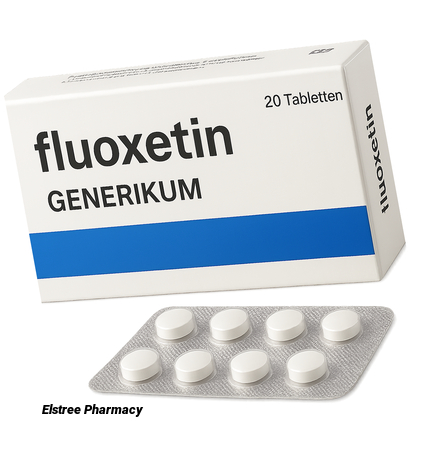
Yes, certain fluoxetin (fluoxetine) products are authorised for supply without a prescription in the UK under strict pharmacy supervision as a Pharmacy medicine (P). These non-prescription presentations are intended for short-term self-care, allowing adult patients to purchase fluoxetin online or in-store without a prescription. This OTC availability makes it easier to buy fluoxetin cheaply and quickly, but it is vital to follow label instructions, observe recommended dosing limits, and seek professional advice if symptoms persist beyond the authorised treatment duration.
Note that not every strength, pack size or brand of fluoxetin is non-prescription. Prescription Only (POM) fluoxetine products remain available for specialist treatment plans, such as long-term management of major depressive disorder, obsessive-compulsive disorder (OCD), bulimia nervosa, panic disorder or premenstrual dysphoric disorder (PMDD). Always check the exact legal classification of the product you purchase and whether it aligns with the approved indication.
The UK categorises medicines into three main legal supply classes: Prescription Only Medicine (POM), Pharmacy medicine (P) and General Sales List medicine (GSL). Fluoxetin supplied without prescription falls into the Pharmacy medicine category. This means you can purchase fluoxetin from a registered pharmacy after appropriate assessment by a pharmacist, either in person or through remote consultation for online orders.
Pharmacy medicines require professional oversight to ensure patients select the right product, understand dosing, and are aware of side effects or interactions. Although no formal prescription is needed, you cannot simply buy P-category fluoxetine from a supermarket or non-pharmacy retailer; it must be dispensed by a licensed pharmacy.
Fluoxetin, commonly known by brand names such as Prozac, is a selective serotonin reuptake inhibitor (SSRI) antidepressant. It works by increasing the availability of serotonin, a neurotransmitter associated with mood regulation, in the synaptic cleft of nerve cells.
Fluoxetine is used to treat a variety of psychiatric and behavioural conditions, including depression, anxiety disorders, obsessive-compulsive disorder, bulimia nervosa, panic disorder and premenstrual dysphoric disorder. Non-prescription fluoxetine is often limited to mild to moderate depression and anxiety for brief durations.
The active pharmaceutical ingredient is fluoxetine hydrochloride. Generic and branded products contain this identical molecule at specified strengths, such as 20 mg per capsule. Inactive ingredients and capsule shells may differ between manufacturers.
Fluoxetin is commonly supplied as gastro-resistant capsules, tablets, or liquid formulations. Gastro-resistance protects the active drug from stomach acid to ensure optimal absorption in the small intestine. The authorised formulation for P-category products is stated in the Summary of Product Characteristics (SmPC) and patient leaflet.
Serotonin is released by neurons to transmit signals. After release, serotonin is reabsorbed into the presynaptic cell by the serotonin transporter. Fluoxetine blocks this transporter, reducing reuptake and increasing the amount of serotonin available in the synaptic cleft. Enhanced serotonin signaling can improve mood, reduce anxiety and regulate other central nervous system functions.
Unlike some fast-acting medications, fluoxetine typically requires 2–4 weeks of consistent dosing before patients notice significant changes in mood or anxiety symptoms. Patience and adherence are essential.
Fluoxetine has a relatively long half-life (1–4 days for the parent compound, and up to 14 days for its active metabolite norfluoxetine). This pharmacokinetic profile supports once-daily dosing and may reduce withdrawal risk if a single dose is missed.
Fluoxetine’s long half-life and selectivity for serotonin transporters distinguish it from older tricyclic antidepressants and monoamine oxidase inhibitors, which have broader neurotransmitter effects and different side effect profiles.
Prices vary depending on brand, pack size, retailer and formulation. Online pharmacies often offer generic fluoxetine at cheaper rates than branded equivalents. To purchase fluoxetin at a low price, compare multiple online offers, check for bulk pack discounts, and look for seasonal promotions.
Cost differences can reflect manufacturing processes, excipient choice, pack size, distribution channels and retailer pricing strategies. A cheaper product is not necessarily inferior; generics undergo rigorous testing to demonstrate bioequivalence to reference medicines.
| Example | Strength | Formulation | Price | Status | Note |
|---|---|---|---|---|---|
| Generic Fluoxetin A | 20 mg | Capsules x 28 | £12.49 | In stock | Order online for home delivery |
| Branded Prozac | 20 mg | Capsules x 30 | £24.99 | Information only | Pharmacy medicine, check availability |
Fluoxetine is available in multiple strengths, typically 10 mg, 20 mg and 40 mg capsules or tablets. Non-prescription presentations are usually limited to one strength and pack size, for instance 20 mg capsules in packs of 28.
Formulations include gastro-resistant capsules, orodispersible tablets, liquid oral suspension and delayed-release capsules. Non-prescription pack specifications differ from prescription pack options in strength, pack size and intended duration.
Pack size affects legal classification and recommended treatment length. Short-course OTC supply might be restricted to a 14- or 28-day pack, while larger packs require a prescription.
| Feature | Why it matters |
| Strength | Determines daily dose and titration steps |
| Formulation | Influences absorption and ease of administration |
| Pack size | Limits self-medication duration and supply classification |
| Brand vs generic | Affects price, appearance and excipient profile |
Generics contain the same active ingredient and must meet the same quality, safety and efficacy standards as branded products. Differences lie in inactive ingredients, capsule shell color, and price.
Fluoxetine is a first-line SSRI for treating mild to moderate depression. It can improve mood, energy levels, sleep patterns and appetite. Non-prescription fluoxetine is indicated only for short-term relief of mild symptoms.
Fluoxetine can help reduce symptoms of generalised anxiety disorder, panic disorder and social anxiety by modulating serotonin. Prescription products may be needed for more severe or chronic anxiety states.
Higher doses of fluoxetine are used under medical supervision for obsessive-compulsive disorder and bulimia nervosa. These uses are usually prescription-only and not covered by the OTC authorisation.
Fluoxetine has off-label and investigational uses such as premenstrual dysphoric disorder and post-traumatic stress disorder. Patients should seek medical advice before using fluoxetine for any unapproved indication.
A Prescription Only Medicine can only be supplied with a valid prescription from a doctor, dentist or other authorised prescriber.
A Pharmacy medicine can be supplied without a prescription but only under the supervision of a pharmacist in a registered pharmacy. Fluoxetin OTC presentations fall into this category.
General Sales List medicines can be sold in a wider range of retail outlets without pharmacist supervision. Fluoxetine is not classified as GSL when supplied for mood disorders.
The same active ingredient may have different legal statuses depending on strength, pack size, intended use and level of professional oversight needed to ensure safe use.
The Medicines and Healthcare products Regulatory Agency (MHRA) determines classifications and oversees reclassification processes in the UK.
Serotonin–norepinephrine reuptake inhibitors such as venlafaxine and duloxetine may be prescribed for patients who do not respond to SSRIs.
Older class of antidepressants used when SSRIs are contraindicated or ineffective. Side effect profiles differ significantly.
Cognitive behavioural therapy (CBT), counselling and other talking therapies are important non-pharmacological options that may be used alone or alongside medication.
Fluoxetine has a longer half-life than most SSRIs, which may reduce withdrawal symptoms but delay steady-state concentration. Sertraline and citalopram have shorter half-lives and require daily dosing without an active metabolite.
Individual SSRIs can differ in terms of side effects such as gastrointestinal upset, sexual dysfunction or sleep disturbance. Patient response is variable and may guide product choice.
| Feature | Fluoxetine | Sertraline | Citalopram |
| Half-life | 1–4 days (parent), 7–15 days (metabolite) | 26 hours | 35 hours |
| Onset of action | 2–4 weeks | 2–4 weeks | 2–4 weeks |
| Withdrawal risk | Lower | Higher | Higher |
| OTC availability | Yes, limited P-category | No | No |
No single SSRI is universally best. Choice depends on patient history, side effect profile, comorbidities and cost considerations when purchasing online or in person.
Regular balanced meals and nutrient-rich diets support mental health. Omega-3 fatty acids, B vitamins and consistent meal timing may improve treatment response.
Alcohol can worsen depression and anxiety and may interact with central nervous system effects of fluoxetine. Patients are advised to limit or avoid alcohol while on treatment.
Caffeine intake can affect sleep and anxiety levels. Moderation may enhance symptom control and reduce jitteriness.
Physical activity, mindfulness, stress reduction and adequate sleep complement pharmacological treatment and may reduce overall medication needs.
Side effects listed in product information include nausea, headache, insomnia or somnolence, dry mouth, sweating and gastrointestinal disturbance such as diarrhoea or constipation. Most are mild and transient.
| Area | Examples described in product information |
| Neurological | Headache, dizziness, tremor |
| Digestive | Nausea, diarrhea, appetite changes |
| Psychiatric | Insomnia, anxiety, mood swings |
| Sexual | Reduced libido, erectile dysfunction |
| Hypersensitivity | Rare allergic reactions |
Serotonin syndrome is rare but serious; symptoms include agitation, hallucinations, rapid heartbeat and high temperature. Seek immediate medical attention if these occur.
Leaflets list all potential adverse effects and guidance on management, ensuring informed use when purchasing fluoxetine online or in-store.
Non-prescription fluoxetin is authorised for short-term self-care. Persistent or severe symptoms require assessment by a healthcare professional to establish a diagnosis and long-term management plan.
Long-term fluoxetine prescribing involves monitoring mood, suicidal ideation, weight, blood pressure and potential metabolic effects. Regular follow-up appointments are essential.
Although fluoxetine’s long half-life reduces withdrawal risk, dose tapering under professional guidance minimizes rebound symptoms when stopping long-term therapy.
Preventing relapse of depression or anxiety may require continued therapy beyond initial symptom resolution. Prescription products and medical oversight are needed for extended treatment.
Yes. Interactions include other serotonergic drugs (risk of serotonin syndrome), anticoagulants (increased bleeding risk), and drugs metabolised by CYP2D6 and CYP3A4. Always check with a pharmacist.
Concurrent use of SSRIs and monoamine oxidase inhibitors can precipitate severe serotonin syndrome. A 14-day washout period is required.
Suppressing mood symptoms can mask underlying conditions. New or worsening symptoms require medical assessment rather than continued self-medication.
A generic medicine contains the same active ingredient as the reference product and is approved based on bioequivalence studies. Inactive ingredients, appearance and packaging may differ.
Manufacturers submit unique product data that reflect specific excipient lists, authorised indications and pack types. Always read the leaflet supplied with the exact product you purchase.
Regulatory approval applies to specific products. The SmPC and patient leaflet provide legal, safe and up-to-date guidance on indication, dosage, safety and interactions.
Reliable UK sources include the MHRA website, the electronic Medicines Compendium (eMC) and qualified healthcare professionals. Always consult a pharmacist before buying fluoxetine online.
No. This information is general guidance provided by Elstree Pharmacy (The Corner Shop B, High Street, Elstree, WD6 3BY). For personalised advice and support, please contact the pharmacy team or your GP.