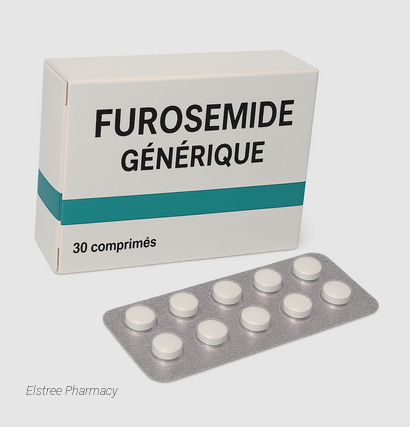
Furosemide is a potent loop diuretic commonly used to treat fluid retention (edema) and hypertension. In the UK, furosemide is classified as a Prescription Only Medicine (POM) for all indications. This means that, at present, you cannot legally purchase standard furosemide 20 mg or 40 mg tablets over the counter or online without a valid prescription from a qualified healthcare professional. Any offers to buy furosemide without prescription must be carefully verified to ensure compliance with UK regulations and patient safety. If you see generic furosemide advertised as “OTC” or “without prescription,” always seek professional advice from the pharmacy team or your GP before proceeding with an order.
In the UK, medicines are classified into three main categories based on the level of control required for safe supply:
Furosemide remains a POM due to its potent effects on fluid balance, electrolyte disturbances and the need for dosage titration under medical supervision. Understanding these classifications is essential when you consider buy, purchase or order options online to ensure you remain within legal boundaries and maintain safety.
Furosemide is a loop diuretic, also known as frusemide in some countries, that increases urine output by inhibiting sodium and chloride reabsorption in the ascending limb of the loop of Henle within the kidney. This leads to enhanced excretion of water, sodium, chloride and other electrolytes.
After oral administration, furosemide is rapidly absorbed, with bioavailability ranging from 60–70%. The onset of diuretic action is typically within one hour, with peak effect at 1–2 hours and duration of action lasting up to six hours, depending on the individual and dose.
Generic and branded furosemide products may differ by their excipients, coatings, tablet shape, size and packaging. Although tablet appearance varies, the active pharmaceutical ingredient remains the same when products are approved as bioequivalent by the Medicines and Healthcare products Regulatory Agency (MHRA).
Because furosemide alters fluid and electrolyte balance, regular monitoring of renal function, serum electrolytes (especially potassium, magnesium, sodium and calcium) and blood pressure is required during therapy. This ensures the correct dosage and detects adverse effects early.
Furosemide’s mechanism focuses purely on fluid and electrolyte excretion. It does not possess pain-relieving or fever-reducing properties. Misunderstanding drug classes can lead to inappropriate use and potential harm.
The loop of Henle is a segment of the nephron responsible for creating a concentration gradient in the renal medulla, enabling water reabsorption elsewhere in the kidney. Furosemide acts on the thick ascending limb of this loop.
Furosemide binds to the Na⁺-K⁺-2Cl⁻ cotransporter in the thick ascending limb, blocking reabsorption of these ions. As sodium and chloride remain in the filtrate, water follows osmotically, increasing urine volume and lowering blood volume.
No. Unlike antacids that neutralise stomach acid, furosemide changes the composition and volume of body fluids by enhancing renal excretion. Effects on acid-base balance can occur indirectly, such as metabolic alkalosis, but this is a secondary outcome.
Oral furosemide typically induces diuresis within 30–60 minutes, with peak diuretic effect at 1–2 hours. Intravenous administration may act within 5 minutes, used in emergency settings (e.g., acute pulmonary edema).
Renal function, baseline electrolyte status, dose, frequency, concomitant medications and individual patient characteristics (age, comorbidities) determine response to furosemide. Dose adjustment is often necessary to achieve desired diuresis without excessive dehydration or electrolyte disturbance.
The cost of furosemide depends on strength, pack size, brand versus generic status and pharmacy pricing policies. Although prescription charges may apply under the NHS, private purchase prices online can range widely.
Online pharmacies and brick-and-mortar retailers set prices based on procurement costs, distribution fees, branding, competition, discounts on bulk purchases and promotional campaigns focused on cheaper generic stock.
| Example Pack | Strength | Formulation | Price (GBP) | Status | Note |
|---|---|---|---|---|---|
| Furosemide A | 20 mg | Tablet | £3.50 | POM | Prescription required |
| Furosemide B | 40 mg | Tablet | £5.99 | POM | Generic |
| Furosemide C | 20 mg | Oral solution | £7.20 | POM | Fast delivery |
Contact Elstree Pharmacy for the most up-to-date availability and pricing. We offer order processing, discreet packaging, secure payment and reliable delivery across the UK.
Furosemide tablets commonly come in 20 mg and 40 mg strengths. Other dosage forms include oral solutions (e.g., 10 mg/mL), injectable vials (10 mg/mL), and in some markets 5 mg tablets or combination packs with potassium supplementation.
Different formulations allow flexible dosing, suit patient preferences (tablets vs. liquid), facilitate administration in children or those with swallowing difficulties, and provide intravenous routes in acute care (e.g., heart failure exacerbation).
Pack size can influence prescribing rules, particularly for controlled substances or supply-limited medications. While furosemide is not controlled, large packs may require bulk supply control to ensure appropriate clinical review.
Generic furosemide contains the same active ingredient, strength and must demonstrate bioequivalence. Excipients, tablet shape, colour and packaging can vary. Price differences reflect manufacturing, branding, distribution and pharmacy discounts.
Edema is excess fluid accumulation in tissues, often manifesting as swelling in ankles, legs, abdomen or lungs (pulmonary edema). It can result from heart failure, liver cirrhosis, kidney disease or certain medications.
By reducing intravascular volume and decreasing peripheral vascular resistance, furosemide lowers blood pressure. It is often used in combination with other antihypertensive agents for patients with reduced kidney function or fluid overload.
In both acute decompensated and chronic heart failure, furosemide reduces preload, alleviates pulmonary and peripheral congestion, and improves symptoms such as breathlessness and exercise tolerance. Dosing often requires titration to clinical response.
Furosemide is a Prescription Only Medicine (POM). It can only be supplied legally in the UK with a valid prescription from an authorised prescriber.
Medicines requiring pharmacist input before supply are classed as P. Although furosemide is POM, other diuretics such as thiazides may be P where pharmacist review ensures safe use. GSL medications generally have minimal risk.
No current furosemide formulation is classified as GSL or P in the UK. All strengths and pack sizes require prescription supply to ensure proper monitoring and dose adjustment.
The Medicines and Healthcare products Regulatory Agency (MHRA) oversees classification, reclassification and legal supply frameworks. Changes depend on data, safety profiles and therapeutic context.
Choice depends on underlying condition, kidney function, electrolyte status and individual response. Combination diuretic therapy may be used for resistant cases.
ACE inhibitors, angiotensin receptor blockers, calcium channel blockers and beta-blockers constitute major alternative or adjunct classes for blood pressure control, each with distinct mechanisms and monitoring requirements.
Dietary sodium restriction, weight management, exercise, fluid management, compression stockings for venous insufficiency and daily weight monitoring are essential complementary strategies alongside drug therapy.
| Feature | Furosemide | Hydrochlorothiazide | Spironolactone |
| Drug class | Loop diuretic | Thiazide diuretic | Potassium-sparing |
| Site of action | Ascending loop of Henle | DCT (distal convoluted tubule) | Collecting ducts |
| Onset (oral) | 30–60 min | 2–4 hours | 2–4 hours |
| Duration | 6 hours | 12–24 hours | 24–48 hours |
| Potassium loss risk | High | Moderate | Low |
| Typical use | Edema, HF | Hypertension | HF, ascites |
No single diuretic is superior for every patient. Individual factors such as comorbidities, electrolyte risk, kidney function, cost and dosing convenience guide choice.
Reducing dietary sodium enhances diuretic efficacy and helps prevent fluid retention. Patients on furosemide should follow tailored guidance on fluid intake—avoiding both dehydration and excessive intake.
Daily self-weighing provides an early indicator of fluid gains or losses. A sudden weight increase of 1–2 kg in 24–48 hours warrants seeking pharmacist or medical advice.
Physical activity supports cardiovascular health and venous return. However, vigorous exercise when volume-depleted can cause dizziness or hypotension—monitor symptoms and adjust dosages or fluid intake as directed.
Alcohol has diuretic properties and may worsen dehydration. Caffeine can increase diuresis but its effect varies. Both should be consumed in moderation, with awareness of overall fluid status.
| System | Possible side effects |
| Electrolytes | Hypokalemia, hyponatremia, hypomagnesemia, hypocalcemia |
| Renal | Azotemia, dehydration, reduced GFR |
| Metabolic | Increased uric acid (gout flare), hyperglycemia |
| Blood pressure | Orthostatic hypotension, dizziness |
| Skin | Photosensitivity, rash |
| Hearing | Rare ototoxicity at high doses or rapid IV injection |
Not everyone experiences side effects. Frequency and severity depend on dose, duration, individual risk factors and concomitant medications.
Hypersensitivity to furosemide can cause rash, itching, angioedema or anaphylaxis. Though rare, immediate medical help is required for serious reactions.
Routine blood tests and clinical reviews detect emerging imbalances early, allowing dose adjustment or supplementation (e.g., potassium) to maintain safety and efficacy.
Chronic diuretic use may affect kidney function, electrolyte status, blood pressure control and overall quality of life. A structured review ensures continued appropriateness of therapy.
Symptoms such as severe weakness, confusion, irregular heartbeat, persistent dizziness, reduced urine output or signs of dehydration require prompt assessment by a healthcare professional.
Always inform the pharmacist about all medicines, including over-the-counter, herbal or recreational substances, to avoid clinically important interactions.
A generic furosemide product is produced by manufacturers other than the originator brand but must demonstrate the same quality, safety and efficacy. It is generally cheaper, offering cost savings without compromising therapeutic effect.
Each authorised product has specific Summary of Product Characteristics and patient information leaflet tailored to its formulation, pack size, excipients and approved indications. Always review the leaflet supplied.
Authoritative sources include the MHRA website, the electronic Medicines Compendium (eMC), NICE guidelines and qualified healthcare professionals. Online order pages may provide summary details but should not replace professional advice.
No. This article is for general informational purposes only. For personalised guidance on dosing, drug interactions, monitoring, side effects or ordering online, please speak directly to the pharmacy team at Elstree Pharmacy (The Corner Shop B, High Street, Elstree, WD6 3BY) or your GP.