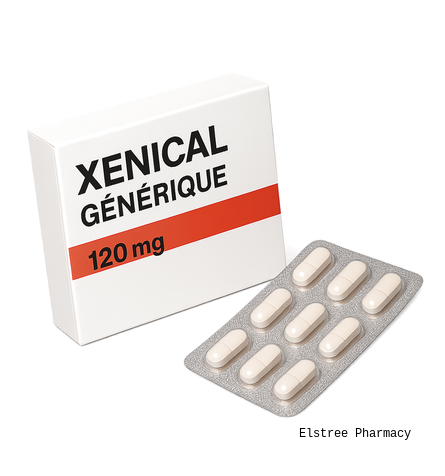
Yes, specific orlistat products at the 60 mg dose (often referred to as generic Xenical) are authorised in the United Kingdom for supply without a prescription for short-term adjunctive weight-loss treatment in overweight adults. This is not a blanket approval for all orlistat formulations or strengths. Prescription-only orlistat 120 mg products remain classified as POM under UK law.
The non-prescription 60 mg capsules are intended to be used alongside a reduced-calorie diet and under the supervision of a pharmacist for up to 24 weeks. Generic Xenical presentations sold online without prescription must meet the same standards for active ingredient quality as the reference product.
Our online pharmacy offers genuine generic Xenical (orlistat 60 mg) that you can purchase cheaply and conveniently, with fast delivery across the UK. For doses beyond the approved OTC regimen or longer-term therapy, a prescription from your GP is typically required.
In the UK, human medicines are assigned to one of three legal supply categories: Prescription Only Medicine (POM), Pharmacy medicine (P) and General Sales List medicine (GSL). A Pharmacy medicine (P) such as generic orlistat 60 mg can be supplied without a doctor’s prescription but only under the supervision of a pharmacist. This classification is designed to provide a level of professional oversight, ensuring products are used safely and effectively.
Just because a medicine is sold “over the counter” does not mean it is available in supermarkets or petrol stations. Pharmacy medicines must be sold in registered pharmacy premises or by an online pharmacy that meets MHRA standards, like Elstree Pharmacy.
Orlistat is a lipase inhibitor that reduces the absorption of dietary fats from the gastrointestinal tract. By blocking pancreatic and gastric lipases, orlistat decreases the amount of fat that is broken down into absorbable free fatty acids and monoglycerides.
By reducing fat absorption, orlistat produces a modest but clinically meaningful reduction in caloric intake, which can support weight loss when combined with a low-fat, calorie-controlled diet and regular physical activity. Clinical trials have shown that patients using orlistat in combination with diet achieve greater weight loss than diet alone.
The pharmacologically active ingredient is orlistat. Generic versions of Xenical contain the same orlistat molecule at the specified dosage, and must demonstrate bioequivalence to the originator product.
Generic and branded orlistat contain the identical active molecule and must meet stringent regulatory standards. Differences may exist in excipients, capsule shell materials and pack presentation, but therapeutic effects are equivalent when the products are authorised as interchangeable by the MHRA or EMA.
You may begin to lose weight as early as within two to four weeks of starting treatment, provided you maintain dietary and activity recommendations. The maximum approved treatment period for OTC orlistat is 24 weeks, although prescription guidelines for 120 mg allow longer courses under medical supervision.
Orlistat acts locally in the gastrointestinal tract by forming a covalent bond with the active site serine of gastric and pancreatic lipases. This inhibits their activity, preventing the hydrolysis of triglycerides into absorbable free fatty acids and monoglycerides.
Fat-soluble vitamins (A, D, E and K) and essential fatty acids require dietary fat for optimal absorption. Concomitant supplementation with a multivitamin is recommended to avoid deficiencies when using orlistat long term. Ideally, vitamins should be taken at least 2 hours before or after orlistat ingestion.
Orlistat should be taken during or up to one hour after each main meal containing fat. If a meal is missed or contains no fat, the dose can be skipped to reduce the risk of gastrointestinal side effects.
Unlike some appetite suppressants, orlistat does not directly affect the central hunger-regulating pathways. Its weight-loss effect depends entirely on reduced fat absorption and the patient’s commitment to a low-fat diet and healthy lifestyle.
High-fat meals may increase the risk of gastrointestinal side effects such as oily spotting, faecal urgency and flatulence with discharge. Adhering to a diet where approximately 30% of calories come from fat can optimise tolerability and effectiveness.
Prices for orlistat 60 mg capsules vary by pack size and retailer. Elstree Pharmacy offers competitively priced generic Xenical with no hidden fees. Our online price table below gives indicative ranges, but for up-to-date cheap pricing, please contact our team.
| Example | Strength | Formulation | Price | Status | Note |
|---|---|---|---|---|---|
| Generic Xenical A | 60 mg | Capsules, 42-count pack | £25.99 | Pharmacy (P) | Supplied without prescription online |
| Generic Xenical B | 60 mg | Capsules, 84-count pack | £39.49 | Pharmacy (P) | Ask Elstree Pharmacy for offers |
Prices can change due to promotions, pack sizes and supplier costs. A lower price does not imply inferior quality. All generic Xenical sold by Elstree Pharmacy meets the same regulatory standards as branded products.
In the UK, orlistat is available OTC as 60 mg capsules (generic Xenical) and POM as 120 mg capsules (branded Xenical). The 60 mg dose is indicated for self-care weight management, whereas the 120 mg dose is prescribed for clinically supervised obesity treatment.
Pharmacy classification may depend on maximum supply quantity and intended duration. OTC 60 mg presentations are licensed for 24-week courses at up to three doses per day. Packs exceeding this period may require prescription supply.
Most orlistat products are capsules. Experimental oral suspensions exist but are not routinely marketed in the UK. Capsules remain the standard pharmaceutical form for accurate dosing and stability.
Yes. Packaging design, capsule colour and branding differ between manufacturers. Always check the active ingredient, strength and expiry date rather than relying on visual appearance.
Obesity is defined by an excess of body fat that may impair health. A common measure is body mass index (BMI), where a BMI ≥ 30 kg/m² indicates obesity and 25–29.9 kg/m² indicates overweight status.
Orlistat is an adjunct to dietary and lifestyle interventions. It may be considered when BMI ≥ 28 kg/m² with comorbidities or BMI ≥ 30 kg/m² alone, in line with NICE guidelines. It is not a standalone solution and works best with sustained behaviour change.
A balanced calorie-controlled diet with approximately 30% of energy from fat, sufficient protein, complex carbohydrates and plenty of fruits and vegetables. Regular meal spacing and portion control are key to minimising side effects and enhancing weight loss.
Physical activity supports weight maintenance and weight loss by increasing energy expenditure, preserving lean muscle mass and improving metabolic health. Moderate aerobic exercise for at least 150 minutes per week is generally advised.
Clinical studies of orlistat in combination with diet show an average additional weight loss of 3–4 kg compared to diet alone over one year. Individual results vary based on adherence, diet composition and baseline BMI.
Prescription Only Medicine (POM) requires a valid prescription from a qualified prescriber. Branded Xenical 120 mg falls into this category for higher-dose orlistat therapy.
Pharmacy medicine can be supplied without prescription but only under pharmacy supervision. Generic orlistat 60 mg is classified as a P medicine, meaning you can buy it online from Elstree Pharmacy without a doctor’s prescription but with pharmacist oversight.
General Sales List medicines can be sold in non-pharmacy outlets. Orlistat is not classified as GSL at any strength, reflecting the need for dietary advice and monitoring of side effects.
Classification depends on strength, formulation, pack size, indication and required level of professional oversight. Higher-dose orlistat and extended-duration packs require prescription to ensure appropriate clinical management.
The Medicines and Healthcare products Regulatory Agency (MHRA) oversees UK medicine classifications, safety monitoring and reclassification applications. Products may move between categories following regulatory review.
Appetite suppressants and GLP-1 receptor agonists act centrally to reduce hunger or slow gastric emptying. Orlistat acts peripherally in the gut to reduce fat absorption. Choice depends on patient preference, contraindications and cost.
Both agents induce weight loss but by different mechanisms. Liraglutide is injected and acts on GLP-1 receptors to suppress appetite; orlistat is oral and reduces fat absorption. Liraglutide often achieves greater average weight loss but at higher cost and with injection site considerations.
Naltrexone/bupropion combination targets central reward pathways to reduce cravings, whereas orlistat works in the digestive tract. Tolerance, contraindications and monitoring differ substantially.
| Feature | Orlistat | Liraglutide | Phentermine |
| Drug class | Lipase inhibitor | GLP-1 agonist | Appetite suppressant |
| Administration | Oral capsules | Subcutaneous injection | Oral tablets |
| OTC availability | Yes (60 mg) | No | No |
| Prescription use | 120 mg | Yes | Yes |
No. Choice depends on individual health profile, treatment goals, side-effect tolerability, mode of administration and cost considerations. A healthcare professional can guide selection based on medical history and preferences.
Yes. Diets high in fat can both reduce the tolerability of orlistat and diminish its weight-loss benefit by promoting gastrointestinal side effects. Sticking to the recommended fat intake of around 30% of total calories optimises both efficacy and comfort.
Regular physical activity amplifies weight loss and aids long-term weight maintenance. Aerobic exercise, strength training and lifestyle activity are all beneficial when combined with orlistat treatment.
Alcohol contains calories and may also interfere with medication adherence and dietary discipline. Limiting alcohol intake can support both weight-loss goals and overall health.
Smoking cessation is beneficial for health but may lead to weight gain in some individuals. Orlistat can help manage weight changes during smoking cessation when used appropriately.
Yes. Gastrointestinal effects are common and usually mild to moderate, diminishing over time as patients adapt to dietary changes. Not everyone experiences side effects, but they are more likely if dietary fat intake is higher than recommended.
| Area | Common effects |
| Gastrointestinal | Oily spotting, faecal urgency, flatulence with discharge, fatty stools |
| Nutrition | Possible fat-soluble vitamin deficiency without supplementation |
| General | Headache or mild abdominal cramping |
| Allergic | Rare urticaria or rash |
| Long-term use | Requires monitoring of vitamin status and liver function |
These effects result from unabsorbed dietary fat passing through the intestines, which can cause changes in stool consistency and frequency. Reducing dietary fat intake usually improves tolerability.
Severe hypersensitivity reactions to orlistat are rare but require immediate medical attention if symptoms such as facial swelling or difficulty breathing develop.
The 60 mg OTC licence supports weight-loss efforts for up to 24 weeks. Chronic obesity management often requires a comprehensive plan including medical supervision, lifestyle counselling and possibly prescription therapies for sustained results.
Extended use raises considerations about fat-soluble vitamin deficiencies, potential gallstone formation and adherence challenges. A healthcare professional review can assess ongoing need, monitor lab parameters and adjust co-therapy as needed.
Yes. Weight regain or plateauing may signal underlying metabolic adaptations, hormonal factors or dietary non-compliance. Professional review can identify if additional or alternative treatments are warranted.
Monitoring ensures safe continuation of orlistat therapy, adequacy of vitamin supplementation, evaluation of side effects and assessment of long-term weight maintenance strategies.
Yes. Orlistat may reduce absorption of medications such as ciclosporin or levothyroxine if taken concurrently. A 4-hour separation is recommended between orlistat and such medications to maintain therapeutic levels.
Since orlistat reduces absorption of fat-soluble vitamins, patients should take a daily multivitamin supplement at least 2 hours before or after dosing. Periodic blood tests may be advised for long-term users.
Orlistat can alter vitamin K absorption, potentially impacting anticoagulant therapy with warfarin. Regular INR monitoring is recommended when initiating orlistat in these patients.
Orlistat is generally not recommended during pregnancy or breastfeeding unless potential benefits outweigh risks. Nutrient absorption concerns and limited safety data necessitate specialist advice.
A generic medicine contains the same active ingredient (orlistat) as the branded reference product (Xenical) and meets regulatory requirements for quality, safety and efficacy. Differences are typically limited to excipients and packaging.
Different manufacturers may have distinct authorised indications, excipient profiles, pack sizes and legal classifications, resulting in leaflet variations. Always read the specific product leaflet supplied with your medicine.
For optimal tolerability, aim for a daily fat intake of 20–30% of total calories. Consult our pharmacist for tailored dietary advice and support materials to help track macronutrient intake.
Trusted sources include the MHRA website, the electronic Medicines Compendium (eMC) and the patient information leaflet provided with the product. Our pharmacy team can also answer queries about generic Xenical and related matters.
No. This page provides general guidance only. For advice tailored to your circumstances, please speak to the pharmacists at Elstree Pharmacy (The Corner Shop B, High Street, Elstree, WD6 3BY) or consult your GP.