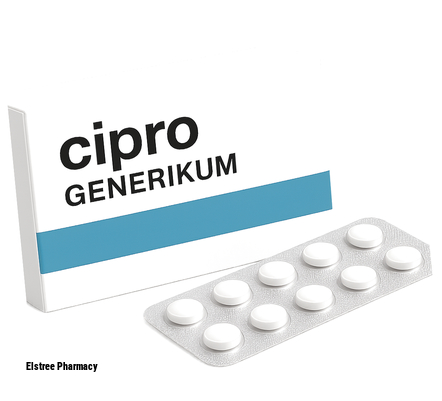
Currently, ciprofloxacin (commonly known as Cipro) is classified as a Prescription Only Medicine (POM) in the United Kingdom for systemic use against bacterial infections. It cannot be legally supplied without a prescription for most systemic indications. However, certain topical or ophthalmic formulations may be available as Pharmacy (P) medicines under strict conditions. Purchasing ciprofloxacin online without a prescription for systemic use is not lawful in the UK. This article explains legal pathways for ordering generic Cipro, options for topical preparations, and when a prescription is required.
The UK categorises human medicines into three legal supply channels: Prescription Only Medicine (POM), Pharmacy medicine (P), and General Sales List (GSL). Pharmacy medicines can be supplied without a prescription but only through a registered pharmacy by a qualified pharmacist or under supervision. These products often require professional consultation before sale. Generic Cipro tablets and capsules for internal use remain POM, whereas some eye drops or ear drops containing ciprofloxacin could fall under the Pharmacy medicine category.
Ciprofloxacin is a broad-spectrum antibiotic belonging to the fluoroquinolone class. It treats a variety of bacterial infections by inhibiting bacterial DNA gyrase and topoisomerase IV, essential enzymes for DNA replication and repair. A generic version of Cipro contains the same active ingredient as branded Ciprofloxacin products, meeting stringent regulatory standards for quality, safety, and efficacy.
Fluoroquinolones are synthetic antibacterial agents effective against Gram-negative and Gram-positive organisms. Other medications in this group include levofloxacin, moxifloxacin, and norfloxacin. These antibiotics are often reserved for infections where alternative treatments are unsuitable or where resistance patterns demand their use.
The active pharmaceutical ingredient is ciprofloxacin hydrochloride. Generic Cipro products approved in the UK have the same chemical entity as branded equivalents. Inactive ingredients, tablet coatings, and release mechanisms may vary between manufacturers.
Ciprofloxacin immediate-release tablets dissolve quickly in the gastrointestinal tract, allowing rapid absorption. Extended-release or modified-release formulations are designed to maintain therapeutic blood concentrations over a longer interval, potentially reducing dosing frequency and improving adherence.
Ciprofloxacin is bactericidal, meaning it kills bacteria by interfering with DNA processes, rather than merely inhibiting growth. This activity contributes to its efficacy against various infections when used appropriately.
Appropriate use of antibiotics like ciprofloxacin is critical to combat antimicrobial resistance. Unnecessary or inappropriate antibiotic purchase, especially without prescription, can lead to increased resistance, limiting future treatment options.
DNA gyrase and topoisomerase IV are bacterial enzymes that manage DNA supercoiling and separation during replication. Inhibiting these targets prevents bacterial chromosome replication and transcription, leading to cell death.
After oral administration, ciprofloxacin is well absorbed, with peak plasma concentrations reached within 1-2 hours. It distributes widely in tissues and body fluids, including the prostate, lungs, and urine. Kidney elimination accounts for most of its clearance.
Food can slightly delay peak absorption but does not significantly reduce overall bioavailability. For best tolerance, ciprofloxacin may be taken with or without food. However, dairy products and calcium-fortified juices can bind the drug, reducing absorption. It is recommended to avoid taking ciprofloxacin with high-calcium meals or supplements within two hours of dosing.
Ciprofloxacin is potent against many Gram-negative pathogens, such as Escherichia coli, Klebsiella spp., Pseudomonas aeruginosa, and Haemophilus influenzae. It has moderate activity against Gram-positive organisms like Staphylococcus aureus but less activity against Streptococcus pneumoniae compared to other fluoroquinolones.
Resistance to fluoroquinolones can occur via mutations in target enzymes, efflux pumps, or decreased permeability. Antimicrobial stewardship, appropriate dosing, and completing prescribed courses reduce resistance emergence.
Generic ciprofloxacin tablets and capsules vary in price by strength, pack size, and supplier. Retail pharmacy prices may range from around £10 to £30 for a standard course, depending on pack quantity. Online pharmacies may offer cheaper options or discounts for bulk orders. This information is for guidance; for current prices, please contact Elstree Pharmacy or check our online catalogue.
Price differences reflect factors such as manufacturer, pack size, distribution channels, and retailer discounts. Bulk purchase by pharmacies can result in lower unit costs, passed to customers ordering online in larger quantities.
| Example | Strength | Formulation | Price | Status | Note |
|---|---|---|---|---|---|
| Generic Cipro A | 500 mg | Immediate-release tablets, 10 pack | £12.49 | POM | Licensed generic, prescription required |
| Generic Cipro B | 250 mg | Extended-release tablets, 20 pack | £18.99 | POM | Prescription required; online orders only |
| Cipro eye drops | 0.3% | Ophthalmic solution, 5 ml | £9.99 | P | Pharmacy medicine, no systemic prescription needed |
Ciprofloxacin tablets are commonly available in 250 mg and 500 mg strengths. Oral suspension and extended-release formulations may be provided for special indications. Topical ophthalmic and otic preparations typically have concentrations around 0.2–0.3% for eye or ear infections.
Oral immediate-release, extended-release tablets, oral suspension, eye drops, ear drops. Rectal and intravenous forms exist for hospital use but are not available OTC. Each formulation has specific approved indications and dosing regimens.
Pack size determines the total number of doses and relates to licensed course durations. A pack of 10 or 20 tablets covers typical 5–10 day courses. Larger packs may be available by special order for extended regimens under prescription.
| Feature | Why it matters |
| Active ingredient | Ensures therapeutic effect |
| Strength | Determines dose per intake |
| Formulation | Impacts release and absorption |
| Pack size | Matches treatment duration |
| Legal category | Controls how supplied |
Generic ciprofloxacin contains the same active substance at equivalent potency to branded Cipro. Excipients and appearance may differ. Generics must demonstrate bioequivalence before approval.
Ciprofloxacin is effective for uncomplicated and complicated urinary tract infections caused by susceptible organisms, including cystitis and pyelonephritis. Typical adult dosing is 250–500 mg twice daily for 3–14 days, depending on severity.
It can treat bronchitis, pneumonia, and chronic obstructive pulmonary disease exacerbations when pathogens are likely susceptible. Use is guided by local resistance and patient history. Extended-release formulations may be chosen for once-daily administration.
Skin and soft tissue infections, gastrointestinal infections (e.g., Traveller’s Diarrhoea), bone and joint infections, intra-abdominal infections (with metronidazole), and typhoid fever in certain settings. Specialist input is recommended for serious infections.
In specific circumstances, such as high-risk exposures or surgical prophylaxis, ciprofloxacin may be used under strict guidelines. Overuse for prophylaxis without indication is discouraged.
Topical ciprofloxacin eye drops treat bacterial conjunctivitis and corneal ulcers. Otic preparations address swimmer’s ear (otitis externa) when bacteria are implicated. These products are often classified as Pharmacy (P) medicines.
A Prescription Only Medicine requires a valid prescription. Most systemic ciprofloxacin products are POM due to potential adverse effects, resistance concerns, and specialised dosing.
Pharmacy medicines can be supplied without a prescription but only by a pharmacist. Certain topical ciprofloxacin preparations (e.g., eye drops) may be P.
General Sales List medicines can be sold in non-pharmacy outlets. No ciprofloxacin products are classified as GSL due to safety and resistance considerations.
No. Systemic ciprofloxacin is POM. Only specific topical formulations are P. Always check legal status before attempting to order cheap generic Cipro online without prescription.
Classification depends on indication, strength, route, pack size, and required professional oversight. Efficacy, safety profile, and abuse potential inform MHRA decisions on supply category.
The MHRA oversees classification and reclassification of medicines, ensuring public health protection and access to appropriate treatments.
Local resistance patterns, allergy history, infection site, bacterial susceptibility, and patient characteristics guide antibiotic selection. Alternatives may offer narrower spectrum or better safety profiles for certain populations.
Levofloxacin is the active L-isomer of ofloxacin. It offers once-daily dosing and enhanced activity against some Gram-positive pathogens. Resistance profiles and individual patient factors determine choice.
Penicillins inhibit cell wall synthesis and are effective against different spectra of bacteria. Ciprofloxacin is valuable when penicillins fail or in patients allergic to beta-lactams, but risks of tendon toxicity and QT prolongation must be considered.
| Feature | Ciprofloxacin | Levofloxacin | Amoxicillin |
| Class | Fluoroquinolone | Fluoroquinolone | Penicillin |
| Mechanism | Inhibits DNA gyrase | Inhibits DNA gyrase | Inhibits cell wall synthesis |
| OTC status | POM (topical P) | POM (some topical P) | GSL/POM |
| Dosing | 250–500 mg bd | 500 mg od | 500 mg tid |
No. Antibiotic selection depends on infection type, bacterial susceptibility, patient factors, pharmacokinetics, and safety considerations. Specialist guidance or culture results may be needed.
Dairy, calcium-fortified foods, iron and zinc supplements bind ciprofloxacin, reducing absorption. Avoid such products within two hours before or after dosing. Other foods do not significantly impact absorption.
Moderate alcohol may be tolerated but can exacerbate side effects like dizziness or stomach upset. Avoid heavy drinking during antibiotic treatment to minimise adverse effects.
Smoking does not directly alter ciprofloxacin efficacy but may impair immune function and slow infection resolution. Quitting smoking can improve overall treatment outcomes.
Maintain adequate fluid intake to prevent crystalluria and support renal elimination. Fluid intake also helps reduce gastrointestinal discomfort.
Yes. Common side effects include gastrointestinal upset, headache, and dizziness. Serious adverse effects can occur and are described in product information supplied with each medicine.
| System | Examples |
| Gastrointestinal | Nausea, diarrhoea, abdominal pain |
| Nervous system | Headache, dizziness, insomnia |
| Tendons | Tendinitis, tendon rupture (rare) |
| Cardiac | QT prolongation (rare) |
| Hypersensitivity | Rash, anaphylaxis (rare) |
Fluoroquinolones can affect tendon collagen metabolism, leading to tendinopathy or rupture. Risk increases with age, corticosteroid use, and strenuous activity.
Rarely, ciprofloxacin may cause peripheral neuropathy or central nervous system effects such as seizures, especially in predisposed individuals.
Complete safety information allows healthcare professionals and patients to recognise, manage, and report adverse events promptly.
Extended or unnecessary antibiotic use increases risk of resistance, C. difficile infection, and adverse events. Courses should be as short as clinically effective.
Stewardship promotes appropriate selection, dosing, route, and duration of antibiotic therapy. It aims to optimise patient outcomes and minimise resistance emergence.
Yes. Recurrent urinary or respiratory infections may signal structural, immunological, or lifestyle factors requiring investigation rather than repeated ciprofloxacin courses.
Yes. Interactions include antacids, sucralfate, iron, zinc (reduce absorption), warfarin (enhanced anticoagulation), theophylline (increased levels), and certain antiarrhythmics (QT risk). Detailed interaction data are in the product information.
Calcium in dairy binds ciprofloxacin, forming insoluble complexes that reduce drug absorption and efficacy.
Fluoroquinolones can cause dysglycaemia (hypo- or hyperglycaemia). Caution in diabetic patients and those on hypoglycaemic agents.
A generic medicine contains the same active ingredient, dosage form, strength, and efficacy as the reference branded product. It is bioequivalent and meets regulatory quality standards.
Manufacturers may update patient information leaflets based on brand-specific data, packaging, and regulatory updates. Always read the leaflet supplied with each pack.
Regulatory approval applies to specific formulations, indications, and legal categories. Product leaflets and summaries of product characteristics provide essential details on dosage, contraindications, and side effects.
Consult the MHRA website, the Electronic Medicines Compendium (emc), or speak to a qualified pharmacist for authoritative data on generic Cipro and other antibiotics.
No. This information is general guidance provided by Elstree Pharmacy (The Corner Shop B, High Street, Elstree, WD6 3BY). For personalised advice on ordering, dosing, interactions, and safety, please speak to our pharmacy team or your healthcare provider.