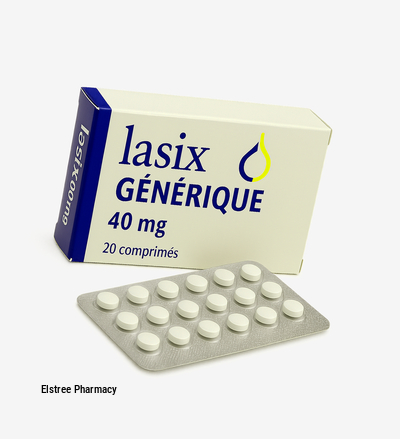
Lasix (furosemide) is classified in the United Kingdom as a Prescription Only Medicine (POM). It cannot be legally supplied in a community pharmacy without a valid prescription issued by a qualified prescriber in accordance with UK regulations. Despite this, some online services advertise Lasix for purchase without prescription. These offerings often rely on overseas supply chains or operate under frameworks that bypass standard UK regulatory oversight. Purchasing Lasix online without a prescription carries legal and safety risks, including uncertainty about product authenticity, unknown manufacturing quality, and the absence of professional review of your medical history.
Elstree Pharmacy adheres strictly to MHRA guidelines. We only supply Lasix against a valid prescription, ensuring each order is processed in a secure clinical environment. Our fast delivery service is designed to support patients who have spoken to their GP or specialist and received a prescription for furosemide. If you have not seen a prescriber but believe you need diuretic therapy, please consult your GP or use our patient consultation service to obtain a valid prescription in line with UK law.
While some websites claim “no prescription needed” for Lasix, these channels often lack formal accountability or post-delivery support. In contrast, ordering through Elstree Pharmacy guarantees access to professional advice, adherence to UK safety standards, and full traceability of products. Our service model combines convenience with the reassurance of regulated supply, ensuring that you receive genuine Lasix formulations with clear usage instructions and safety information.
The UK legal framework distinguishes three categories of human medicines: Prescription Only Medicine (POM), Pharmacy medicine (P), and General Sales List medicine (GSL). A “Pharmacy medicine” (P) can be supplied without a prescription but only under the supervision of a pharmacist. These products are stocked and sold exclusively in a registered pharmacy setting, ensuring that a qualified pharmacist can provide advice at the point of supply.
Prescription Only Medicines (POM) require a valid prescription from an authorised healthcare professional. General Sales List (GSL) medicines may be sold in various retail outlets without the need for professional oversight, provided certain safety conditions are met. Lasix, being a potent loop diuretic with significant effects on electrolyte balance and fluid status, is designated as a POM. This classification reflects the requirement for medical assessment of indications, dosing adjustments, and safety monitoring that accompany furosemide therapy.
Buying a POM like Lasix online without a prescription circumvents the safeguards built into UK pharmacy practice. Elstree Pharmacy provides a secure online ordering system that only processes genuine prescription forms or equivalent telehealth authorisations. Our procedures ensure compliance with MHRA regulations, including record-keeping, supply checks, and pharmacist intervention when required.
Lasix is the brand name for furosemide, a loop diuretic widely used to reduce excess fluid accumulation (oedema) in conditions such as heart failure, liver cirrhosis and kidney disease. As a diuretic, furosemide increases the excretion of salt (sodium chloride) and water from the body by acting on specific transport mechanisms in the kidneys.
Furosemide is the active pharmaceutical ingredient in Lasix. Chemically, it belongs to the class of loop diuretics, so named for their action on the thick ascending limb of the loop of Henle in the renal nephron. Other loop diuretics include bumetanide, torasemide and ethacrynic acid. Despite differences in potency and pharmacokinetics, they share a common mechanism of inhibiting sodium and chloride reabsorption in the kidney.
The term “loop” refers to the anatomical region in the kidney where furosemide exerts its primary effect. By blocking the Na+-K+-2Cl– co-transporter in the thick ascending limb of the loop of Henle, Lasix prevents reabsorption of these electrolytes, resulting in increased urine volume. This rapid and potent diuresis differentiates loop diuretics from other classes such as thiazides and potassium-sparing agents.
While Lasix reduces extracellular fluid volume and can lower blood pressure, it is not primarily classified as an antihypertensive agent. It is most often used when diuresis is required to manage fluid overload in conditions like heart failure or renal impairment. In some cases, low-dose loop diuretics contribute to blood pressure control, but their principal indication remains oedema management.
No. Lasix promotes the excretion of electrolytes including sodium, chloride, potassium and calcium. Patients on furosemide often require monitoring and replacement of electrolytes, particularly potassium and magnesium, to avoid complications such as hypokalaemia and arrhythmias.
The loop of Henle is a segment of the nephron, the functional unit of the kidney, responsible for concentrating urine and maintaining electrolyte balance. The thick ascending limb reabsorbs a significant proportion of filtered sodium, potassium and chloride, creating an osmotic gradient critical for water conservation and solute handling.
Furosemide binds to the Cl– binding site of the Na+-K+-2Cl– co-transporter on the luminal membrane of epithelial cells in the thick ascending limb. By blocking this transporter, furosemide prevents sodium, potassium and chloride ions from being reabsorbed back into the bloodstream. This action increases osmotic pressure in the tubular fluid, drawing water into the urine and raising diuresis.
When administered orally, Lasix typically begins to act within 30–60 minutes, with peak diuretic effect at 1–2 hours and duration of 6–8 hours. Intravenous injection produces a more rapid onset (5–15 minutes) and shorter duration. Variability in response can be influenced by factors such as renal blood flow, protein binding and concomitant medications.
Furosemide increases urine output but does not directly “dissolve” fluid accumulation. By promoting renal excretion of water and electrolytes, it gradually reduces total body water over hours to days, improving symptoms of fluid overload such as swelling in limbs or shortness of breath in heart failure.
Yes. In chronic heart failure or advanced kidney disease, the efficacy of loop diuretics can diminish over time, a phenomenon known as diuretic resistance. Strategies to overcome resistance include dose escalation, split dosing, combination with thiazide-type diuretics, or using continuous infusion under medical supervision.
The cost of Lasix in the UK depends on prescription charges (if applicable), whether a patient holds exemption status, pack size, strength, and whether it is a branded or generic presentation. NHS prescription charges apply uniformly across most primary care prescriptions, whereas private prescriptions or pharmacy supply services may add dispensing fees.
Retail price variation may reflect differences in supplier procurement costs, dispensing service fees, patient support programmes, and whether the product is branded or generic. Generic furosemide offers the same active ingredient at lower cost in most cases, while branded Lasix may cost more although clinical effects are equivalent.
| Example | Strength | Formulation | Price | Status | Note |
|---|---|---|---|---|---|
| Example A | 40 mg | Film-coated tablets, 28 count | Not stated | Information only | Ask Elstree Pharmacy for current price |
| Example B | 20 mg | Oral solution, 100 mL | Not stated | Information only | Legal classification: POM only |
For exact pricing and availability, please contact the team at Elstree Pharmacy. We provide transparent cost breakdowns and can advise on the most cost-effective generic options where suitable.
Furosemide is typically available in oral strengths of 20 mg, 40 mg and 80 mg tablets, as well as an oral solution (10 mg/mL) and an injectable concentrate for intravenous or intramuscular use. The choice of strength and formulation depends on clinical context, required speed of onset, patient ability to swallow tablets, and monitoring needs.
Lasix tablets are film-coated for ease of swallowing and stability. The oral solution is provided in measured-dose bottles or unit-dose sachets. Injectable furosemide is supplied in ampoules containing 10 mg/mL or 20 mg/mL concentrates. Each presentation has specific storage and handling instructions detailed in the Summary of Product Characteristics.
Pack size influences how many days of treatment are supplied and may affect dispensing fees. Small packs of 14–28 tablets are common for initial prescriptions, whereas long-term therapy may be supplied in boxes of 56 or more tablets. Oral solution bottles range from 100 mL to 500 mL depending on anticipated daily doses.
| Feature | Why it matters |
| Strength | Determines dose flexibility and titration |
| Formulation | Affects onset, dosing accuracy and patient suitability |
| Pack size | Links to intended treatment duration and dispensing rules |
| Route | Oral vs intravenous use in acute care settings |
| Legal category | POM status requires prescription validation |
Generic furosemide contains the same active moiety as branded Lasix. Regulatory approval requires evidence of bioequivalence, ensuring similar pharmacokinetics and clinical effect. Excipients and tablet appearance may differ but therapeutic action remains equivalent under UK licensing requirements.
Lasix is primarily indicated for the management of fluid retention (oedema) associated with congestive heart failure, liver cirrhosis, nephrotic syndrome and chronic kidney disease. It may also be used in acute settings for pulmonary oedema and in hypertensive emergencies when rapid diuresis and blood pressure reduction are required.
Dosing is individualized based on the severity of fluid overload, renal function, electrolyte status and clinical response. Initial oral doses often start at 20–40 mg daily, adjusted upward as needed. In severe cases, split dosing or intravenous administration in hospital may be necessary.
Although not first-line for chronic hypertension, furosemide can lower blood pressure through volume reduction. It is sometimes used in patients with both hypertension and fluid overload, but thiazide or other antihypertensive classes are more commonly employed for long-term blood pressure management.
Paediatric dosing requires specialist oversight. Furosemide may be used in neonatal and paediatric populations for oedema, congenital heart disease, or renal disorders. Doses are calculated by body weight and closely monitored to avoid electrolyte disturbances.
Given its potent diuretic effect and risk of electrolyte imbalance, Lasix is classified as a Prescription Only Medicine in the UK. This designation ensures that supply follows professional assessment, prescription verification, and ongoing monitoring of safety and efficacy.
No. UK law prohibits the sale of POMs in the absence of a valid prescription. Any pharmacy claiming to supply Lasix without prescription contravenes MHRA regulations and risks enforcement action.
Medicines imported or supplied from outside the UK may not conform to UK pharmaceutical standards. Patients using such sources lack assurance of quality, correct labelling, and regulated storage conditions. Elstree Pharmacy sources all products from UK-licensed manufacturers under stringent Good Distribution Practice (GDP).
The Medicines and Healthcare products Regulatory Agency (MHRA) regulates medicine classification, licensing and supply in the UK. They periodically review safety data and may reclassify products if evidence supports a change in legal status.
Thiazide diuretics, such as hydrochlorothiazide and chlortalidone, act on the distal convoluted tubule and are less potent than loop diuretics. They are often used for mild oedema or as first-line therapy in hypertension, sometimes combined with loop diuretics for synergistic effect.
Spironolactone and amiloride inhibit sodium reabsorption in the collecting duct while sparing potassium excretion. They are used in combination with loop diuretics to mitigate hypokalaemia or to treat conditions like primary hyperaldosteronism.
Mannitol is an osmotic diuretic primarily used in acute hospital settings to reduce intracranial or intraocular pressure. It is not suitable for routine management of systemic oedema.
Choice of diuretic depends on the underlying condition, desired potency, electrolyte effects and patient comorbidities. Loop diuretics like Lasix provide rapid and significant fluid removal, whereas thiazides and potassium-sparing agents have specific roles in milder oedema and blood pressure control.
Bumetanide is another loop diuretic with similar mechanism but greater potency on a mg-per-mg basis. Both share risk profiles but differ in duration and onset. Bumetanide may be preferred when higher loop diuretic potency is required.
Hydrochlorothiazide acts more slowly and has a milder diuretic effect. It is often used for hypertension rather than acute oedema. When used together, they can produce an additive diuretic effect.
Spironolactone’s mechanism involves aldosterone receptor antagonism, leading to mild diuresis and potassium retention. It is slower acting but beneficial in conditions like heart failure with hyperaldosteronism. Combining it with furosemide can balance electrolyte disturbances.
| Feature | Furosemide | Bumetanide | Hydrochlorothiazide |
| Drug class | Loop diuretic | Loop diuretic | Thiazide diuretic |
| Main mechanism | Inhibits Na+-K+-2Cl– co-transporter | Same target, higher potency | Inhibits Na+-Cl– co-transporter |
| Onset (oral) | 30–60 min | 30–60 min | 2 hours |
| Duration | 6–8 hours | 6 hours | 12–24 hours |
| Potency | Standard | 5–10× furosemide on weight basis | Weaker |
No. Selection depends on clinical goals, side effect profiles, dosing preferences and patient response. Individual factors guide the choice and dosing regimen.
Excess dietary sodium can blunt the effect of furosemide by promoting sodium retention. A low-salt diet enhances diuretic response and supports long-term fluid balance management.
Fluid restriction may be advised in severe heart failure or when weight gain from fluid overload is problematic. However, overly strict fluid limits can lead to dehydration and electrolyte imbalance, so recommendations should follow professional guidance.
Regular physical activity can improve circulation and support kidney function, but high-intensity exercise can cause fluid shifts. Patients on diuretics should monitor symptoms like dizziness or cramps during exertion.
Daily weight measurement helps detect early fluid retention. Rapid weight gain signals fluid accumulation and may warrant dose adjustment or medical review.
Hypokalaemia is a common side effect due to increased urinary potassium loss. Signs include muscle cramps, weakness and arrhythmias. Regular monitoring of serum potassium is essential, and supplements may be required.
Excessive diuresis can lead to volume depletion, causing dizziness, low blood pressure or acute kidney injury. Patients should watch for lightheadedness, dry mouth or decreased urine output.
High intravenous doses or rapid administration can cause ototoxicity, manifesting as tinnitus or hearing loss. Slow infusion rates and dose adjustments mitigate this risk.
Less common effects include low magnesium, low calcium, metabolic alkalosis, rash or photosensitivity. Rarely, allergic reactions such as Stevens-Johnson syndrome have been reported.
| Area | Examples |
| Electrolytes | Hypokalaemia, hypomagnesaemia |
| Renal | Prerenal azotaemia, acute kidney injury |
| Neurological | Dizziness, headache |
| Skin | Rash, photosensitivity |
| Rare serious | Hearing loss, severe hypersensitivity |
Prolonged diuretic therapy requires periodic blood tests to assess sodium, potassium, magnesium and renal function. Imbalances can have serious cardiovascular and neuromuscular consequences.
Initial monitoring may occur weekly until doses stabilise, then every 3–6 months or sooner if symptoms change. Frequency depends on dose, comorbidities and co-medications.
Chronic use may require dose adjustments due to hemodynamic changes or disease progression. A multidisciplinary approach optimises fluid management and diuretic responsiveness.
Sudden discontinuation can precipitate rebound fluid retention. Any dose reduction or pause should be supervised by a healthcare professional with close monitoring.
Yes. NSAIDs can reduce diuretic efficacy by affecting renal prostaglandin synthesis. ACE inhibitors and ARBs may amplify hypotensive and renal effects. Drugs that prolong QT interval can interact with furosemide-induced electrolyte changes, increasing arrhythmia risk.
Combined nephrotoxic and ototoxic potential raises the risk of kidney injury and hearing loss. Monitoring is essential when these agents are co-administered.
Loop diuretics may impair glucose tolerance or increase blood glucose in diabetic patients. Regular glycaemic monitoring is advised.
Furosemide can reduce lithium clearance, leading to toxicity. Lithium levels require close monitoring if both drugs are used concurrently.
A generic furosemide product contains the same active ingredient as branded Lasix and meets UK regulatory standards for quality, safety and efficacy. Differences may exist in tablet appearance, excipients and packaging.
Different marketing authorisations can specify varying excipient profiles, pack sizes and patient information leaflets. Always check the Summary of Product Characteristics for the exact product details.
Reliable sources include the MHRA website, the electronic Medicines Compendium (eMC), NHS resources and direct advice from pharmacists or prescribers. Patient leaflets supplied with each pack contain approved safety and usage information.
No. This page provides general information from Elstree Pharmacy (The Corner Shop B, High Street, Elstree, WD6 3BY). For personalised advice on dosing, side effects and interactions, please speak with our pharmacy team or your GP.